VOICE ACTOR PROFESSION
Have you ever watched a movie or a TV series and wondered who’s behind that voice capable of moving you so deeply? That’s the voice actor, an artist who transforms words into emotions, giving new life to the characters we know on screen.
Being a voice actor means knowing how to act with your voice, mastering diction, rhythm, and interpretation. It’s a craft that blends passion and technique, perfect for those who love cinema, theater, or simply communicating.
Let’s take a closer look at what it means to be a professional in the world of dubbing.
WHO IS A VOICE ACTOR
A voice actor is a professional who lends their voice to bring characters in movies, TV series, cartoons, documentaries, or video games to life. They don’t just “speak for someone else”: they must make every emotion believable, respect the scene, and convey to the audience the same feelings as in the original version.
In short, they are actors, but behind a microphone.
WHAT A VOICE ACTOR DOES
The job of a voice actor is far more complex than it may seem. In addition to acting, they must help translate and adapt dialogue to preserve meaning, humor, and tone. It’s a constant blend of vocal technique, linguistic knowledge, and artistic sensitivity.
Translation and Script Adaptation
Often, voice actors also take part in adapting the dialogues. This means working on the translation to make the words match the actors’ lip movements.
To do this, a good understanding of the source language and the film’s cultural background is essential. Sometimes jokes, idioms, or emotions don’t translate directly into our culture, so they need to be reinterpreted to have the same impact. It’s precise work, but also highly creative.
Recording in the Dubbing Studio
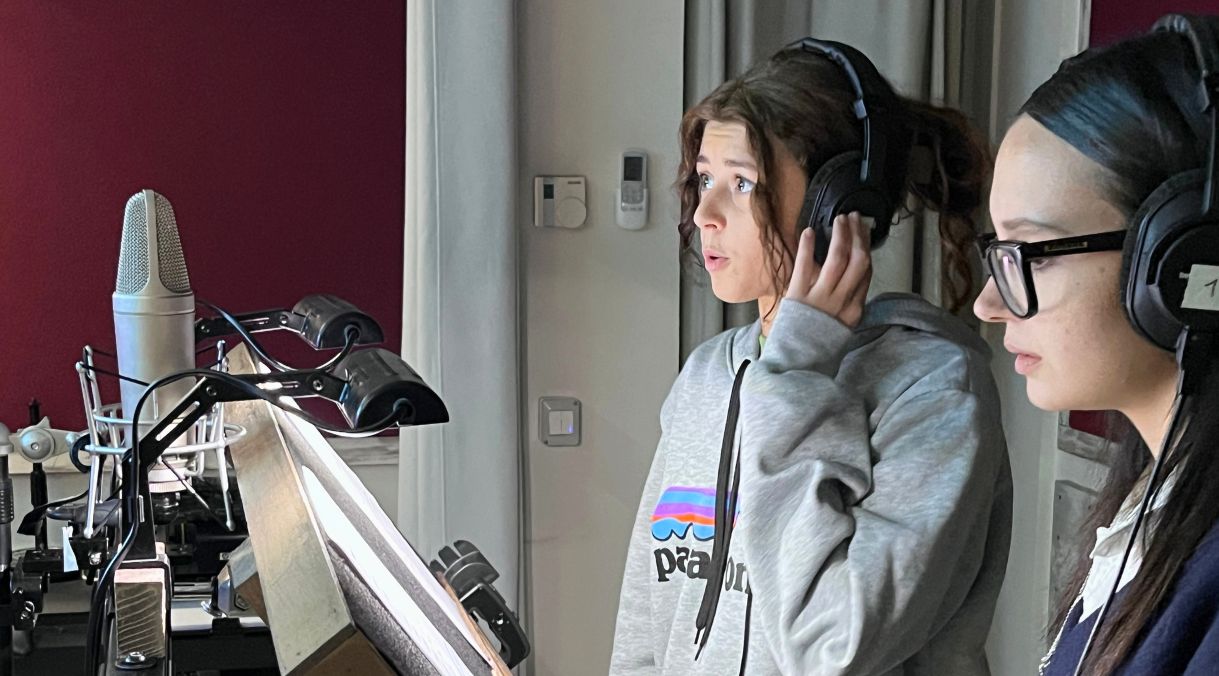
The most well-known phase takes place in the recording studio. Here, the voice actor stands in front of a microphone and a screen showing the scenes. Their task is to perform the lines while perfectly synchronizing their voice with the actor’s lip movements, respecting timing, pauses, breaths, and, most importantly, the original performance.
It’s an intense process: a few seconds of a scene may be recorded several times until they sound just right.
Mixing and Post-Production
Once recording is finished, post-production begins. Sound engineers clean up the tracks, integrate voices with music and sound effects, and adjust levels and balance.
The final result must sound natural, as if the movie had been originally filmed in Italian.
EDUCATION AND TRAINING
After graduating from high school, those who want to become voice actors can pursue specialized professional training. The ideal path combines vocal training with linguistic and cultural studies, essential for working with material from around the world.
Beyond formal education, it’s crucial to:
-
gain practical experience;
-
attend workshops and training labs;
-
create a voice demo (your professional “audio résumé”);
-
build a network of contacts in the industry.
Dubbing is an art, but it also has a strong technical side that requires patience, consistency, and dedication to master.
THE QUALITIES OF A VOICE ACTOR
Anyone dreaming of becoming a professional voice actor must study, train, and build connections. Regardless of the specific path chosen, all voice actors share a few key traits:
The Voice
Voice actors often have a beautiful, distinctive, or easily recognizable voice. It’s their main instrument — and must be cared for throughout their career. They need to learn not to strain it, to breathe properly using the diaphragm, and to avoid habits that could harm the vocal cords.
Diction
Everyone has a natural accent or regional inflection. To work in dubbing, it’s essential to attend diction training to eliminate dialectal tones and achieve a neutral, clean, and understandable pronunciation.
Acting Skills
A voice actor is, after all, an actor. They must know how to interpret, embody characters, and convey emotions without being seen. That’s why a foundation in acting is crucial.
Familiarity with Technology and Equipment
Microphones, recording software, and, nowadays, even AI-based tools are part of everyday work. Being comfortable with these technologies is a major advantage, especially for newcomers.
CAREER OPPORTUNITIES
There isn’t just one path in dubbing. The field offers various specializations, each requiring specific skills and offering different career prospects. Here are the main professional avenues for those who want to turn their voice into a career:
Dubbing for Films and TV Series
This is the most in-demand field. Here, the voice actor must excel at lip synchronization and emotional delivery. The goal is simple (but very difficult): to make the audience believe that the actor is actually speaking Italian.
Dubbing for Animated Films and Series
Animation allows for more expressive freedom. Voices are often colorful, funny, or exaggerated. Great vocal versatility is essential because the audience, mainly children, is very attentive to emotion and tone.
Dubbing for Video Games
Video games are a world of their own: storytelling is non-linear, and the same line may need to be recorded multiple times, with different emotional tones.
The voice is often the only element defining the character, so the voice actor must create a full “sound identity.”
Voice Over
Voice over is used in documentaries, commercials, audiobooks, podcasts, and informational content.
Here, the voice guides the listener on a journey, requiring clear diction, engaging narration, and the ability to hold attention without being seen.
WORKING AS A PROFESSIONAL VOICE ACTOR
In Italy, opportunities exist, especially with the growth of streaming platforms, new video games, and digital content production.
At the same time, competition is fierce. Continuous training and a solid professional strategy are essential.
How Much Does a Voice Actor Earn?
There’s no fixed salary, most voice actors work as freelancers with a VAT number and are paid per project.
Several factors determine pay, such as:
-
experience;
-
number of lines;
-
number of recording sessions;
-
number of characters voiced;
-
type of project (film, commercial, video game, documentary, etc.).
The sector follows a collective bargaining agreement (CCNL) specifically for dubbing, which establishes working conditions and guidelines.