
Effective storytelling for small villages. Communicating the value of villages for sustainable tourism with Marco Bencivenga
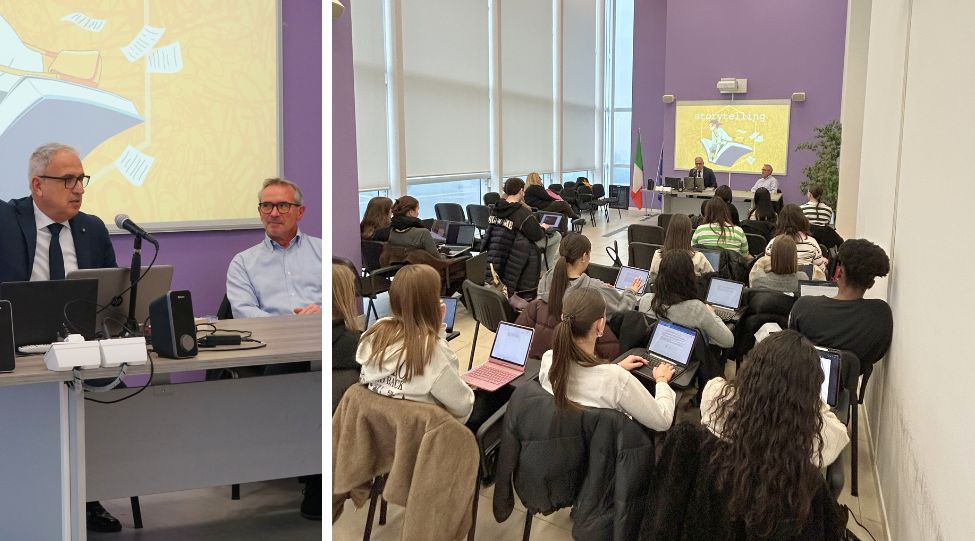
How can we promote the local area, and especially small villages, through communication, storytelling, and content creation? Marco Bencivenga, a RAI journalist and editorialist with years of experience in local communication, spoke with the CIELS students.
LOCAL PROMOTION: DESTINATION MANAGEMENT
A village without a story is just a destination on the map. Promoting it, enhancing it, and convincing people to travel there to discover more can no longer be improvised. These skills are studied and learned within a structured tourism management program.
Moreover, it is precisely by structuring a strategy with measurable and concrete objectives that communication and storytelling can be leveraged, analyzing data and drawing valuable insights for more creative activities.
IF YOU DON’T COMMUNICATE, YOU DON’T EXIST: FROM PAPER TO WEB
For small villages, the issue is even more complex. Precisely because of their small or very small nature, they are highly interesting and unique, but they suffer from a lack of valorization, often due to a lack of strategies to promote them.
At the same time, exploiting them to the point of exhaustion is not the right move: balance is needed to avoid overtourism, thanks also to professionals capable of mediating between the various stakeholders.
So how can we create winning content and storytelling strategies that help small towns stand out in today’s competitive tourism landscape?
As part of the Digital Technologies for e-Tourism course, specifically in the lesson dedicated to “Content Marketing and Digital Storytelling,” Professor Antonio Rizzinelli, CIELS instructor for the three-year program in Tourism Management & International Trade, invited Marco Bencivenga, journalist, writer, RAI columnist, author of biographies and works of fiction, and former editor-in-chief and managing director of local newspapers in Brescia and Cremona, to discuss this with the students.
Back in 1987, Bencivenga spoke about small towns, at a time when the internet hadn’t even been imagined. But despite the changes in media, platforms, and speed of access, some winning elements remain the same.
THE RIGHT CHOICE? A STRATEGIC ONE
Among the reflections that emerged during the lecture, one specifically concerns storytelling: emphasizing stories that are fascinating but lack substance and are actually fraudulent is a double-edged sword. Tourists feel cheated and never return. Therefore, the strategic choice wins: tell the truth, but tell it so well that tourists return, creating strong and passionate bonds with them that spontaneously spread the message, more viral than any trend.
Effective storytelling doesn’t tell the whole story: it selects a distinctive element and makes it unforgettable. Be it a local legend, a typical product, a unique landscape, or a traditional craft. The important thing is knowing how to narrate it in a way that makes an impression, creates an emotional connection, and inspires action.
And then? Providing practical and accessible information: how much it costs, how to get there, what can be done. Because storytelling is exciting, but it must also be useful and concrete.
“I strongly believe in training and experiences from the productive world, beyond institutions,” says Professor Rizzinelli. “That’s why I felt it was essential to complement academic lectures with insightful experiences that help build on the knowledge gained in the classroom, as in the case of Marco Bencivenga with his expertise and experience in communications. Because the outside world moves fast, and e-tourism technologies are even faster, students need these experiences.”